



Inventory is the backbone of product-based businesses. If you sell products, it’s how you make money, but managing inventory isn’t always easy.
Too much stock ties up cash and takes up space. Too little stock leads to missed sales and unhappy customers. That’s why inventory control is important for businesses of all sizes. Inventory management systems help organizations track, manage and control inventory in real time. As a result, this must-have tool reduces errors, saves time and supports growth.
Key Takeaways
Inventory management means having the right products, in the right place, at the right time.
Manual tracking works for small businesses but is error-prone and limits growth.
Modern inventory management services offer real-time visibility, which reduces stockouts, overselling and excess inventory.
Businesses of all sizes benefit from inventory management solutions via more visibility, better control and faster decision-making.
What Is an Inventory Management System?
Inventory management systems help manage the process of tracking and controlling products from purchase to sale. Most businesses follow three basic steps:
1. Purchasing Inventory
Products are ordered from suppliers and delivered to a warehouse, store or distribution center.
2. Storing Inventory
Items are stored until they are needed. Businesses may move products between locations to meet demand.
3. Selling Inventory
Products are shipped or sold to customers, and the business earns profit from the sale.
The main role of inventory management is simple: to have the right products in the right place at the right time. Oftentimes, when these three steps operate smoothly, the business achieves this goal. However, when businesses don’t have the right tools, problems begin to impact operations and profit.
Inventory Management Systems Examples
Businesses use different methods of inventory management based on their size and needs.
1. Manual Inventory Management
Some businesses track inventory using spreadsheets or written logs. This often means counting products by hand at set times, making the process both time-consuming and prone to mistakes. While these manual inventory systems can work for small businesses, it becomes harder to manage when businesses grow.
2. Standalone Inventory Management Software
This type of software often uses barcode scanning, alerts and reports to simplify the process. For example, each product gets a barcode that links to information such as the supplier, weight, product dimensions and more. When the barcode is scanned, the system automatically updates stock levels, reducing errors and saving time. This type of inventory management works well for small to mid-sized businesses that need more control and room for scalability.
3. Cloud-Based Inventory Management Systems
Cloud-based systems are hosted online and offer real-time updates and remote access. Teams can check inventory from anywhere, making them ideal for e-commerce, large or distributed businesses.
Why Is Inventory Management Important?
If inventory is mismanaged, the impact is felt immediately. Without visibility into why issues occur, it’s hard to react quickly to fix them. As a result, problems persist and are likely to happen again.
The right inventory system helps address the following issues:
Preventing Stockouts & Overstocking
If inventory levels are low, customers may not receive what they ordered – or cannot order what they want at all – which affects brand reputation and profit. On the other hand, if levels are high, money is wasted on storage and unsold goods. That’s why many organizations turn to inventory management software. It helps them find the right balance by giving better visibility into:
How many products they have
Where products are located
When to reorder
How fast products are selling
With an accurate view of their inventory, organizations can reduce stockouts, streamline shipment turnaround times and improve customer satisfaction.
Improving Demand Forecasting
Inventory management systems help businesses predict what customers will buy. By tracking past sales, seasonal trends and buying patterns, as well as what products aren’t selling, businesses can adjust orders before problems occur.
The ability to forecast demand reduces waste, lowers the risk of running out of popular stock and protects profit margins.
Supporting Business Continuity
As businesses grow, manual processes that at one time worked often fail. Spreadsheets and paper records can lead to errors and important information can be lost or outdated.
An inventory management system creates a single, reliable source of truth that grows with the business. Teams can see real-time inventory data across locations and use it to respond quickly to changes or disruptions. This keeps operations running smoothly and reduces costly downtime.
The Roadmap to Effective Inventory Management Software
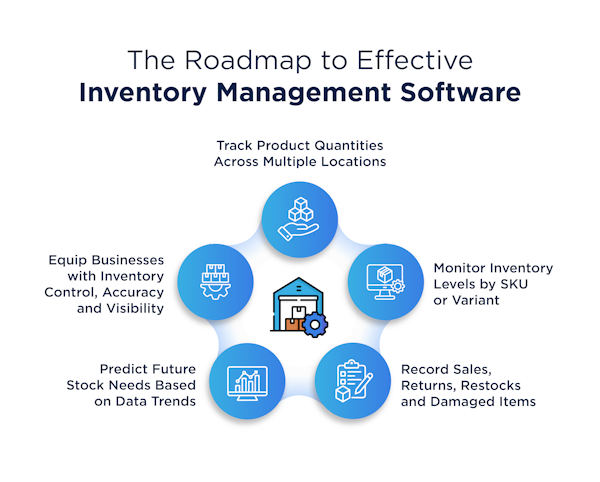
Key Benefits of Inventory Management Systems
Real-Time Inventory Tracking
Know exactly how much stock you have and where it is at all times. Real-time tracking helps teams avoid delays and respond quickly to changes across all locations.
Improved Accuracy & Reduced Human Errors
Inventory management systems use automation to reduce manual data entry, prevent human errors and provide real-time data. As a result, accurate inventory counts become the expectation and costly errors become anomalies.
Cost Reduction & Waste Minimization
Businesses can avoid overbuying and reduce excess stock. These systems can also show when products should be moved to another location or discounted before they lose value.
Better Demand Planning
With inventory management systems, businesses can track sales trends to identify key patterns. For example, if an item is popular, businesses can take advantage of the demand and order more to meet customer needs.
Data-Driven Decision Making
Inventory data reveals insights about sales and operations. Leaders can use these insights to plan for the future and improve performance.
Regulatory & Compliance Support
Inventory management systems help businesses stay compliant with industry rules and regulations. They track product details – such as lot numbers, expiration dates and shipment history – making audits more efficient. They also enable businesses to quickly respond to recalls or other compliance issues.
Enhance Your Inventory Management Services Today
For businesses that move products across their operations, inventory management isn’t just about software. It also depends on the barcode scanners, tablets, handheld devices and printers used every day in warehouses, stores and in the field.
SOTI helps organizations keep those business-critical devices secure, connected and performing at their best with solutions like SOTI MobiControl and SOTI XSight. IT and operations teams have the visibility and control they need to better support inventory processes at scale.
Discover how SOTI’s proven mobility solutions can eliminate downtime, boost accuracy and scale with your business. For more information, contact us.