


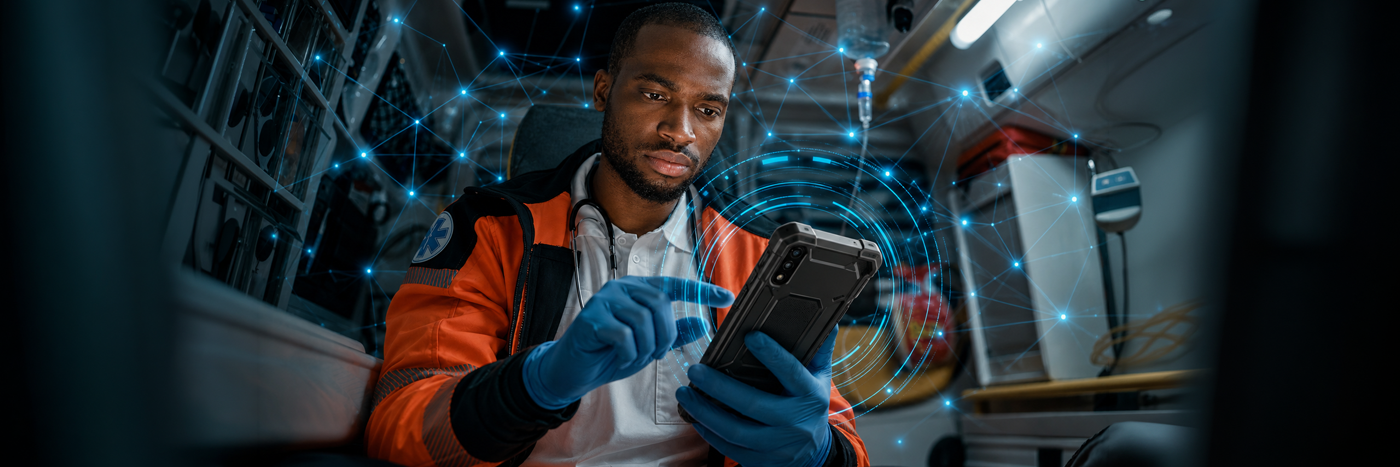
Modern emergency response relies on technology just as much as it relies on people and equipment. Communicating with dispatch, documenting incidents or accessing information on the road is essential for frontline operations.
For The Frontline Under Pressure: Technology, Resilience and the Future of Emergency Response – SOTI's latest research report – 2,500 emergency services workers shared which apps are most important to their day-to-day work. The findings highlight just how critical these tools are for keeping frontline teams connected, informed and ready to respond.
1. Communication Apps: Keeping First Responders Connected
Communication is one of the most important functions of a frontline device. When emergency services workers respond to calls, share updates with dispatch or coordinate with coworkers, communication apps help teams stay aligned.
For search and rescue teams, for example, communication apps can help coordinate search areas, ensure the same area isn’t searched twice and quickly share updates when a lost person is located. That’s why 41% of surveyed search and rescue responders identified messaging and communication tools as their top app.
During an emergency, small disruptions can create bigger challenges. Delayed messages, poor network connections or app performance issues can slow decision-making or leave workers waiting for critical information.
Keeping communication apps reliable is essential to helping frontline teams coordinate their response effectively and improve overall efficiency.
2. Mapping & Navigation Apps: Helping Paramedics & EMTs Reach Patients Faster
Whether responding to an emergency or transporting a patient to the hospital, paramedics, EMTs and ambulance crews rely on mapping and navigation tools to find the most efficient route.
That’s why 51% of these respondents identified mapping and navigation tools as their top app. By providing real-time directions that account for traffic, road closures and construction, these tools help first responders reach their destination as efficiently as possible.
For example, when responding to an emergency call, an EMT driver can use a navigation app to identify the fastest available route and adjust as conditions change. Without reliable navigation, unexpected delays can cost these first responders valuable time, putting lives at risk as a result.
3. Incident Reporting: Making Documentation More Accurate
Traditional paper-based reporting can be time-consuming and prone to error. Digital incident reporting and case management apps help frontline workers capture, access and analyze operational information more effectively.
Nearly half of all firefighters (50%), rescue responders (48%) and field operatives (48%) identified these apps as a key tool for managing operational data more effectively. Having quick access to accurate information can improve response quality, decision-making and overall safety.
For example, by centralizing all incident information, fire departments can keep track of critical details, such as response times, incident outcomes and personnel assignments. Consistent reporting also makes it easier to identify trends and areas for improvement.
Emergency Services Are Ready for Action with the Right Apps
For emergency services workers, apps are more than convenient tools. They help teams communicate, navigate emergencies and capture critical information when it matters most. But these apps can only be effective when the devices and connectivity supporting them are reliable.
Understanding which apps frontline workers rely on is only part of the picture. Organizations must also ensure the technology behind these workflows can perform when emergency services workers need it most.
For more information on the technology challenges frontline workers face and how organizations can build more resilient emergency response operations, read SOTI’s latest Emergency Services report.